
01 · Seed

NanoALi · Evidence by component
What supports each part of NanoALi?
NanoALi brings a fibroblast-rich Seed, type-I collagen support and an autologous platelet-rich-fibrin Signal together. The biological logic and the evidence boundary are shown side by side.
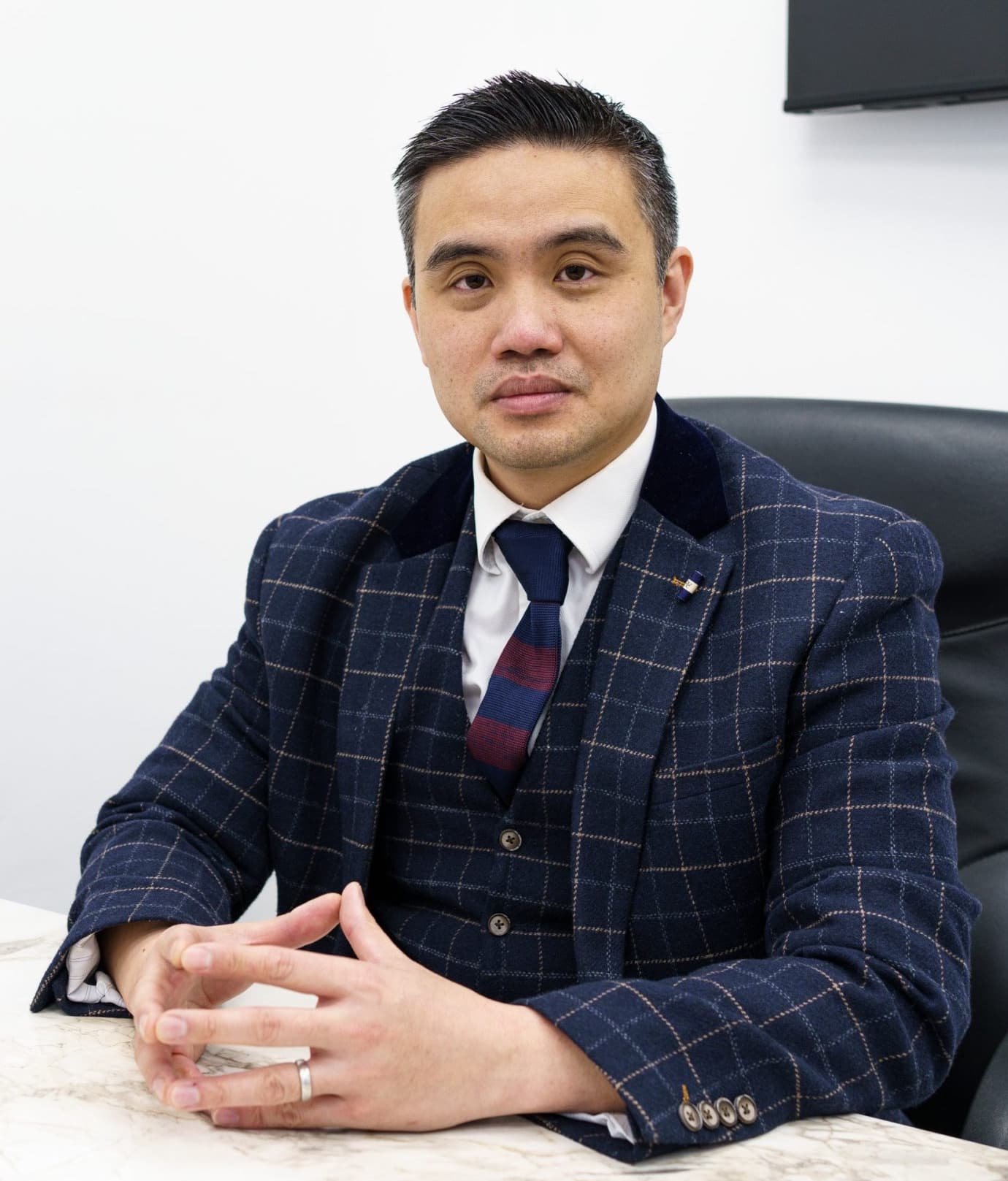 Reviewed byProfessor Paul Lee MBBch, FRCS (Tr & Orth), PhDCartilage and joint preservation expertise
Quick answer
There is no direct human trial of the complete NanoALi protocol. Ligament fibroblast biology, hair-follicle dermal precursors, type-I collagen models and platelet-rich-fibrin research support parts of the rationale, but none can be presented as proof of the combined treatment.
Verified across three networks
Trusted by patients on Doctify, Google and Top Doctors
A transparent evidence map
Three components. Three evidence questions.
Each part is assessed against the ligament target. Evidence for one component is never presented as proof of the complete protocol.
02 · Soil
Type-I collagen scaffold
03 · Signal
Platelet-rich fibrin
01 · Seed
Autologous fibroblast-rich micrografts
A small hair-follicle-bearing tissue sample is mechanically processed on the day into an autologous micrograft suspension containing fibroblast-rich dermal tissue and native matrix.
How directly does the evidence apply?
Human ligament research confirms a fibroblast-rich target tissue, while hair-follicle niches contain accessible dermal precursor populations with neural-crest-like properties and multi-lineage plasticity in laboratory studies. No human study has tested chair-side hair-follicle micrografts as NanoALi.
Target-tissue evidenceHuman in-vitro cell-isolation pilot study.
Human ACL fibroblasts isolated from small tissue pieces
Liu Z et al. Medicine. 2019;98(22):e15907.
Human ACL fibroblasts were isolated from ligament tissue pieces and expanded under laboratory conditions.
Why it belongs here: Confirms the fibroblast biology of the ligament target and the relevance of tissue fragments, but not a hair-follicle donor or injectable clinical protocol.
Read the published sourceMechanistic evidenceLineage-tracing and laboratory study.
Hair-follicle dermal precursors from distinct developmental origins
Jinno H et al. Stem Cells. 2010;28(11):2027–2040.
Follicle-associated dermal precursors from face and trunk had different developmental origins but similar neural-crest-like properties and multi-lineage behaviour.
Why it belongs here: Supports donor-niche plasticity; it is not evidence of ligament differentiation or clinical ligament healing.
Read the published source02 · Soil
Injectable type-I collagen scaffold
A three-dimensional type-I collagen framework intended to retain the delivered biology at a selected ligament target.
How directly does the evidence apply?
Type-I collagen is central to ligament structure, and laboratory models have used type-I collagen hydrogels with ligament-related cells. Professor Lee currently selects ChondroFiller as the injectable Soil, but no direct ligament study of that product or of NanoALi was located.
Mechanistic evidenceHuman cell and scaffold study with cyclic mechanical loading.
Ligament-like constructs in a type-I collagen hydrogel
Nöth U et al. Cytotherapy. 2005;7(5):447–455.
Mesenchymal cells in a type-I collagen hydrogel formed ligament-like extracellular matrix under cyclic stretch, although the constructs were not mechanically suitable for clinical implantation.
Why it belongs here: Mechanistic support for collagen plus mechanical loading; not evidence for an injectable product or clinical NanoALi.
Read the published source03 · Signal
Autologous platelet-rich fibrin
A preparation made from the patient’s blood that adds a fibrin matrix and platelet-derived biological signals to the combined pathway.
How directly does the evidence apply?
Platelet and plasma preparations influence ligament fibroblasts in collagen models, and PRF has recent preclinical MCL evidence. Professor Lee’s selected ArthroZheal preparation has not been clinically proven for NanoALi, so class-level PRF evidence must not be presented as exact-product proof.
Mechanistic evidenceACL-cell and type-I collagen hydrogel study.
Platelets and plasma influence ACL cells in collagen culture
Cheng M et al. Tissue Engineering Part A. 2010;16(5):1479–1489.
Platelets and plasma altered ACL-cell survival, activity, collagen expression and scaffold organisation in three-dimensional culture.
Why it belongs here: Mechanistic support for combining ligament fibroblasts, collagen and platelet signals; not proof of an injection outcome.
Read the published sourcePreclinical evidenceRandomised controlled laboratory study in rats.
PRF compared with PRP in medial collateral ligament recovery
Sakti M et al. Orthopaedic Journal of Sports Medicine. 2025;13(3):23259671251324472.
PRF was associated with higher tensile strength and more organised collagen than PRP or control in this MCL injury model.
Why it belongs here: Target-ligament preclinical evidence, but in animals and using a different preparation from the complete NanoALi protocol.
Read the published sourceThe combined protocol
Clinical innovation, with the evidence boundary kept visible
NanoALi is Professor Lee’s clinician-developed technique for bringing fibroblast-rich micrografts, collagen support and an autologous signal to a selected continuous ligament under image guidance. Its complete clinical effect must be evaluated prospectively rather than inferred from adjacent studies.
Progress sometimes begins by bringing established biological principles together before the combination has a mature evidence base of its own. Years of research, operating experience and familiarity with the component parts provide a serious basis for innovation. They are also the reason to state the remaining uncertainty precisely, rather than hide it behind a broad claim.
Questions about the NanoALi evidence
Has the complete NanoALi protocol been clinically proven?
No direct human comparative trial of the complete named protocol was located. The page therefore shows target-tissue, mechanistic and preclinical evidence separately and does not convert component rationale into a treatment-outcome claim.
What supports the fibroblast-rich Seed?
Human ACL research confirms ligament fibroblast biology, while hair-follicle dermal precursors show neural-crest-like properties and multi-lineage plasticity in laboratory work. No study proves chair-side hair-follicle micrografts in human ligament injury.
Does ChondroFiller have direct ligament evidence?
No direct ChondroFiller ligament study was located. The rationale rests on type-I collagen biology and other laboratory scaffold models; ChondroFiller’s published clinical product evidence is in cartilage.
What supports platelet-rich fibrin in ligament?
Ligament-cell collagen models and a recent rat MCL study support biological plausibility. That animal and preparation-level evidence does not prove ArthroZheal or the complete NanoALi protocol in people.
Still have more specific concerns?
Free Discovery CallOptions that our doctors may discuss include NanoACi, ChondroFiller, Mytocel MSK, joint replacement, established conservative care or surgery, depending on examination and imaging.
Discuss the evidence, limitations and alternatives
Professor Lee can explain how the evidence applies to your ligament, where the rationale is extrapolated and whether this pathway is proportionate.