
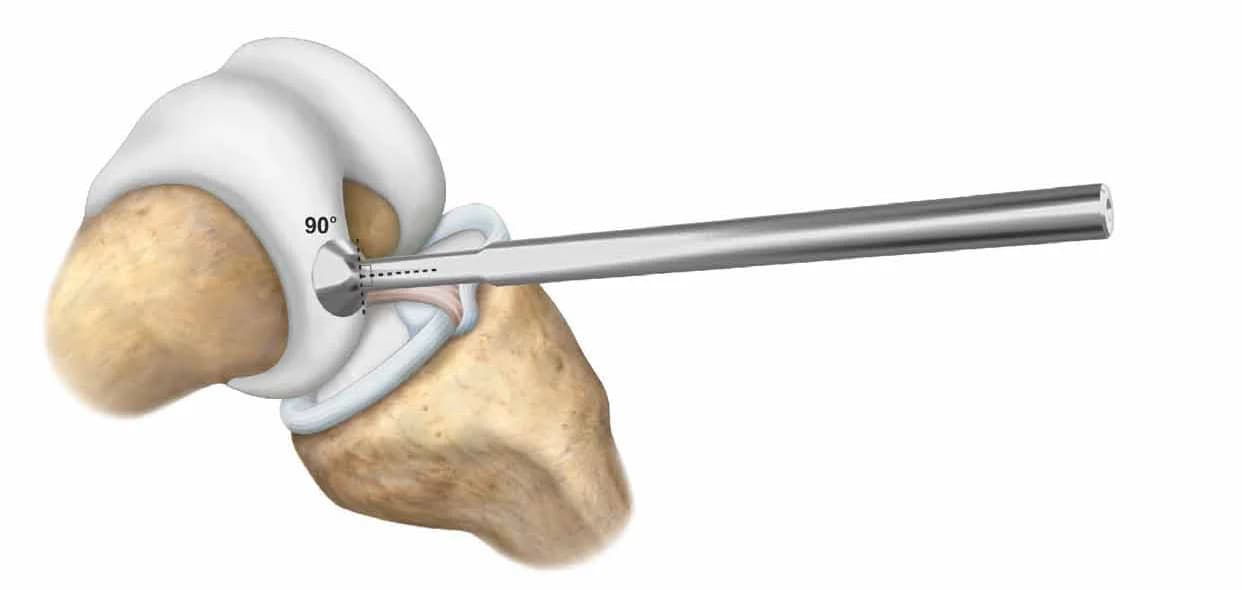
Step 01
Align to the lesion
A perpendicular guide establishes the implant position across the damaged cartilage and underlying bone.

Single-stage osteochondral repair
An off-the-shelf, porous implant designed to support repair of selected knee cartilage damage and the underlying bone in one surgical procedure.
 Reviewed byProfessor Paul Lee MBBch, FRCS (Tr & Orth), PhDCartilage and joint preservation expertise
Current status
Professor Paul Lee plans to use CartiHeal soon. Until availability, training, governance and individual suitability are confirmed, this page explains the implant and evidence without presenting it as a current treatment appointment.
Verified across three networks
Cartilage and bone together
CartiHeal is manufactured from naturally occurring calcium carbonate in a porous aragonite structure. Its upper and lower zones are designed for the different biological environments of cartilage and subchondral bone.
Unlike a donor osteochondral graft, it is off the shelf. Unlike an injection, it requires precise surgical preparation of the lesion and implantation into bone.
Phase 1
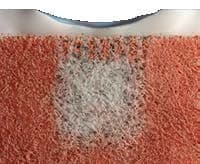
Phase 2
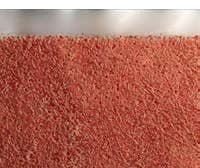
Phase 3
Manufacturer surgical technique
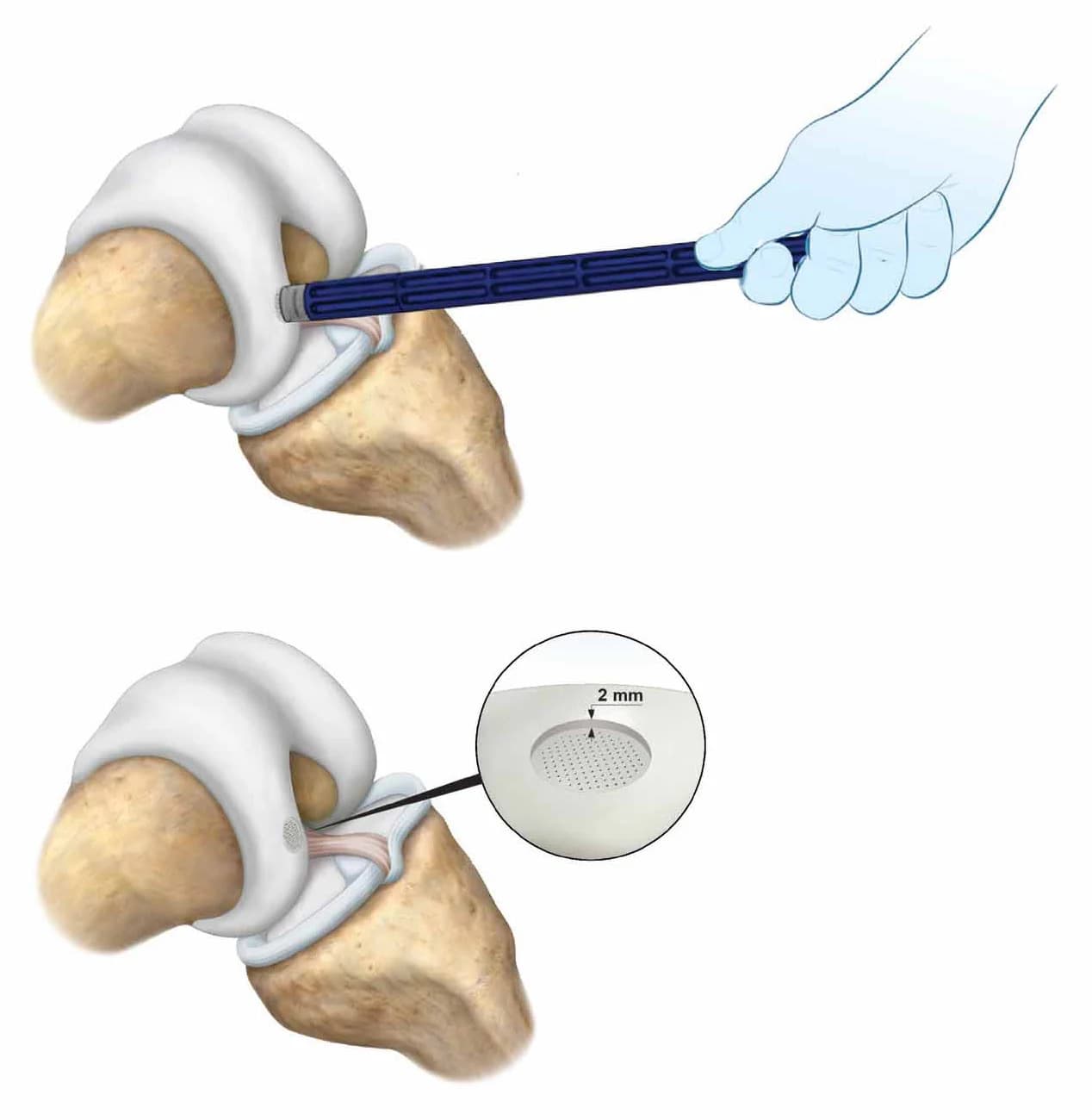
These are the actual CartiHeal technique illustrations supplied with the product information—not a generic representation of cartilage surgery.
Step 01
A perpendicular guide establishes the implant position across the damaged cartilage and underlying bone.
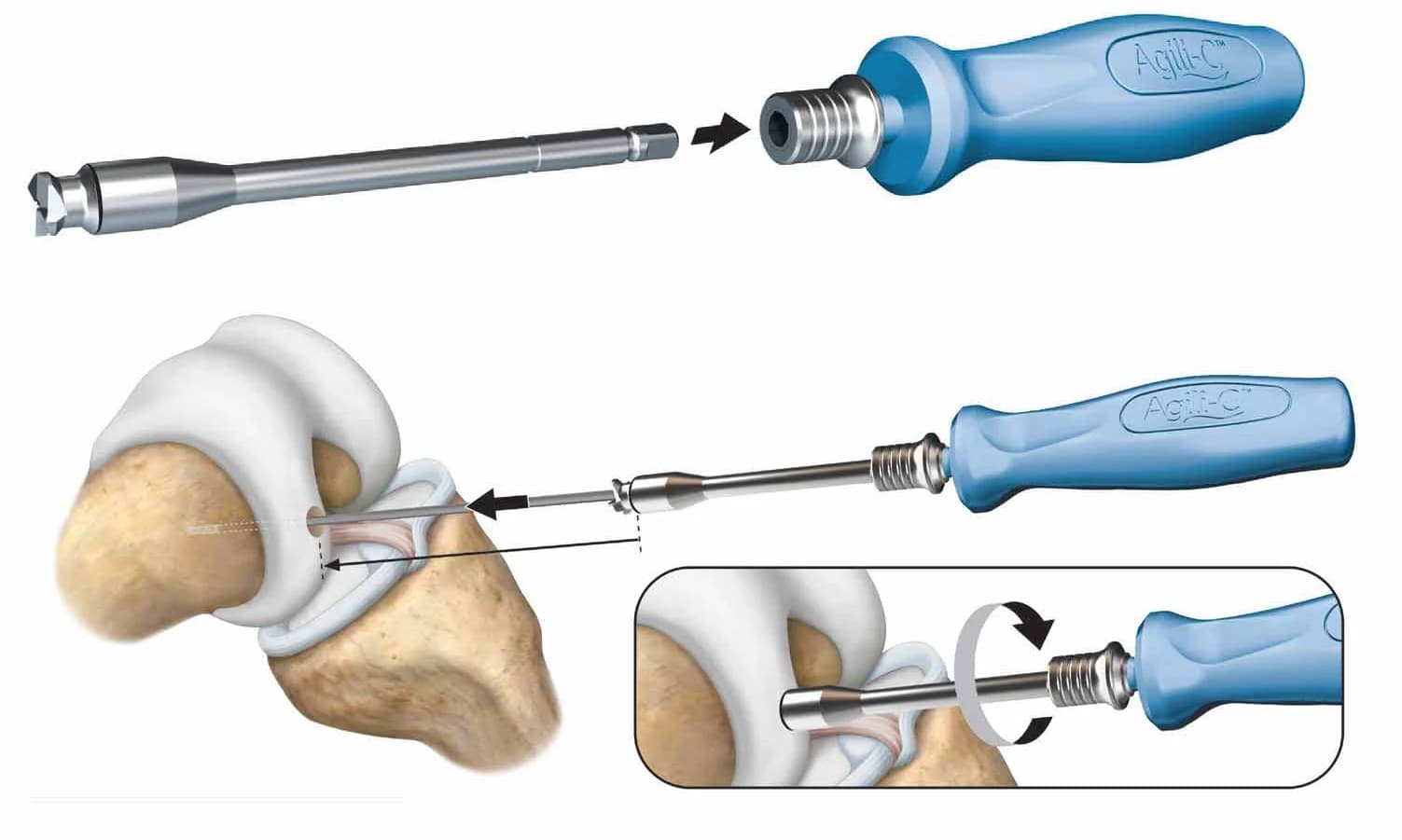
Step 02
The osteochondral site is drilled, reamed and shaped to the selected implant diameter and depth.
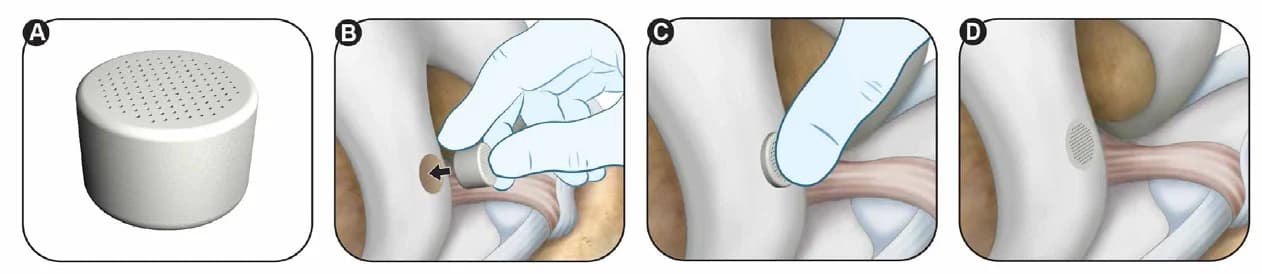
Step 03
The off-the-shelf biphasic implant is introduced into the prepared cylindrical site.
Step 04
The implant is seated approximately 2 mm below the articular surface, following the surgical technique guide.
Technique images reproduced from the supplied Smith+Nephew CartiHeal Agili-C surgical technique guide. Final technique and implant selection follow current product guidance.
Five-year randomised evidence
In the published trial, CartiHeal was compared with a surgical standard-of-care arm using debridement or microfracture. The figures below are group outcomes, not a prediction for an individual patient.
81.0
vs 59.1 control
Mean KOOS at 60 months
74.7%
vs 29.6% control
Clinical responder rate
15.0%
vs 35.7% control
Treatment failure rate
1.8%
vs 9.5% control
Replacement or osteotomy
Trial population: adults aged 21–75, up to three knee lesions, total lesion area 1–7 cm², ICRS grade 3A or higher and Kellgren–Lawrence grade 0–3. These are research criteria, not a blanket indication or a guarantee of suitability.

Selection before technology
Symptoms, lesion size and depth, underlying bone, alignment, stability, meniscus, osteoarthritis grade and rehabilitation capacity all affect the decision. CartiHeal may be one option within a wider cartilage preservation strategy—not the automatic answer to every cartilage defect.
This is surgery. Relevant risks include infection, blood clots, stiffness, swelling, persistent symptoms, implant or tissue-healing failure and the possibility of further surgery. Rehabilitation and protected loading are required. Full risks will be discussed against the current instructions for use before any procedure is offered.
CartiHeal Agili-C is a porous, biphasic osteochondral implant made from naturally occurring calcium carbonate in an aragonite structure. It is placed in a single operation to address selected knee cartilage defects together with the underlying bone.
Not yet. Professor Paul Lee expects to use CartiHeal soon, but this is currently an advance information page rather than confirmation that the procedure is bookable. You can discuss current cartilage options or register your interest with the clinic.
No. CartiHeal is a surgical implant. The damaged osteochondral site is prepared and the implant is seated into the cartilage and underlying bone during a single operation.
The pivotal study enrolled adults aged 21 to 75 with up to three knee cartilage or osteochondral lesions, a total treated area of 1 to 7 cm² and Kellgren–Lawrence grade 0 to 3. Those study criteria describe the research population; they are not a promise that every patient within those ranges is suitable.
The randomised trial compared CartiHeal with a surgical standard-of-care arm based on debridement or microfracture. It was not a comparison with every cartilage operation, osteochondral graft or joint replacement.
Smith+Nephew describes the scaffold as progressively resorbed and replaced by new tissue, with the process occurring broadly over 12 to 18 months. Healing varies and the biological result cannot be guaranteed for an individual patient.
Still have more specific concerns?
Free Discovery CallOptions that our doctors may discuss include NanoACi, ChondroFiller, Mytocel MSK, joint replacement, established conservative care or surgery, depending on examination and imaging.
CartiHeal is not yet presented as a bookable treatment. Professor Lee can review your imaging, explain current cartilage options and record your interest as availability develops.