

CartiHeal Agili-C · Treatment comparison
CartiHeal vs microfracture
CartiHeal places a biphasic scaffold across cartilage and bone. Microfracture stimulates marrow through small bone channels. The five-year comparator needs precise wording.
 Reviewed byProfessor Paul Lee MBBch, FRCS (Tr & Orth), PhDCartilage and joint preservation expertise
Quick answer
The CartiHeal randomised trial reported better five-year outcomes than a control arm using debridement or microfracture. It was not a pure microfracture-only comparison. The procedures also differ substantially in how they create the repair environment.
Verified across three networks
Trusted by patients on Doctify, Google and Top Doctors
Mechanism
A biphasic scaffold and marrow stimulation take different routes
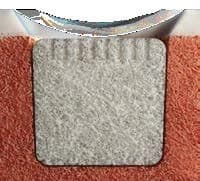
Microfracture creates small channels in subchondral bone so marrow elements can enter the defect and form repair tissue. CartiHeal prepares a cylindrical osteochondral site and fills it with a porous biphasic implant intended to support cartilage-like tissue above and bone below.
Both are single-stage operations and both involve subchondral bone. The material placed, lesion geometry and intended repair environment differ.

Trial interpretation
The randomised control was not microfracture alone
The published CartiHeal trial used a surgical standard-of-care control arm comprising debridement or microfracture. At five years, the implant group had better mean KOOS, responder and failure outcomes than that combined control.
It is accurate to say CartiHeal outperformed the trial control arm. It is more precise than claiming the study was a pure head-to-head comparison against microfracture in every patient.
Choosing between operations
Lesion, bone, previous surgery and future options shape the choice
Lesion size and location, subchondral bone, age, alignment, stability, previous marrow stimulation and rehabilitation capacity all affect which cartilage operation is proportionate.
Neither procedure is a universal solution for diffuse arthritis. Alternatives can include scaffold, cell-based, graft, alignment or replacement pathways depending on the whole knee.
Side-by-side
Implant scaffold or marrow stimulation?

CartiHeal and microfracture questions
Did CartiHeal beat microfracture in the trial?
CartiHeal produced better outcomes than a control arm using debridement or microfracture. The most precise description is superiority to that combined control, not a pure microfracture-only trial.
Are both procedures single-stage?
Yes. Neither requires a separate cell-harvest operation, although the surgical techniques and biological strategies differ.
Do both involve bone?
Yes. Microfracture perforates subchondral bone; CartiHeal creates a prepared cylindrical bed extending into bone for the biphasic implant.
Which has the easier recovery?
Both require cartilage-protection rehabilitation. Exact restrictions depend on lesion, location, procedure and associated work, so the answer is individual.
Still have more specific concerns?
Free Discovery CallOptions that our doctors may discuss include NanoACi, ChondroFiller, Mytocel MSK, joint replacement, established conservative care or surgery, depending on examination and imaging.
Compare current cartilage options for your lesion
Professor Lee can explain established surgical choices and record CartiHeal interest while availability develops.