
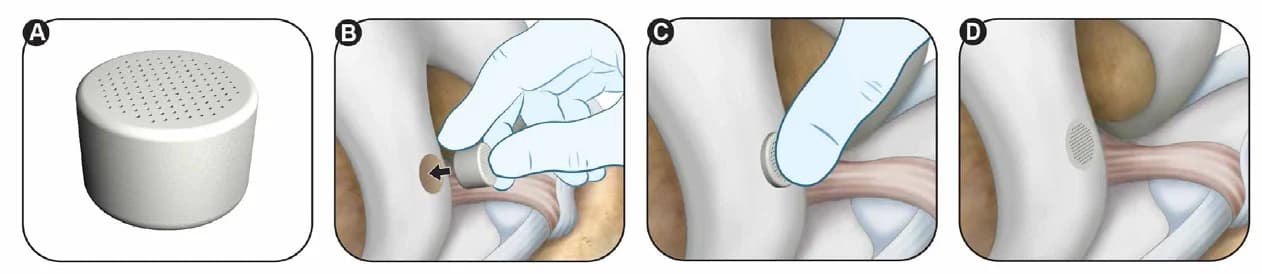
CartiHeal Agili-C · Surgical technique
How is CartiHeal implanted?
The actual manufacturer sequence shows a precise osteochondral operation: align, prepare, place and seat the off-the-shelf biphasic implant.
 Reviewed byProfessor Paul Lee MBBch, FRCS (Tr & Orth), PhDCartilage and joint preservation expertise
Quick answer
CartiHeal is implanted during a single surgical procedure. The lesion is aligned and prepared through cartilage and bone, then the cylindrical implant is placed and seated approximately 2 mm below the articular surface.
Verified across three networks
Trusted by patients on Doctify, Google and Top Doctors
Step one
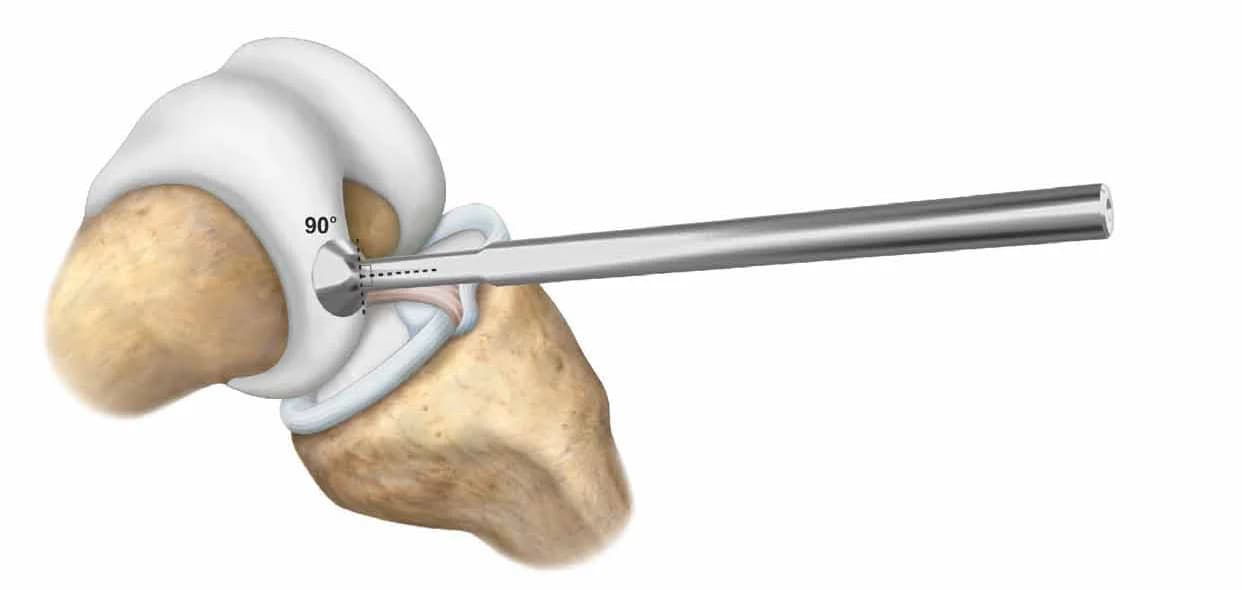
Align perpendicular to the osteochondral lesion
The surgeon identifies the lesion and uses the guide to establish a perpendicular path. Correct alignment matters because the cylindrical implant must cross the cartilage and underlying bone at the planned position.
Lesion mapping, implant diameter and the need for one or more plugs are decided from the defect and current surgical guidance.
Step two
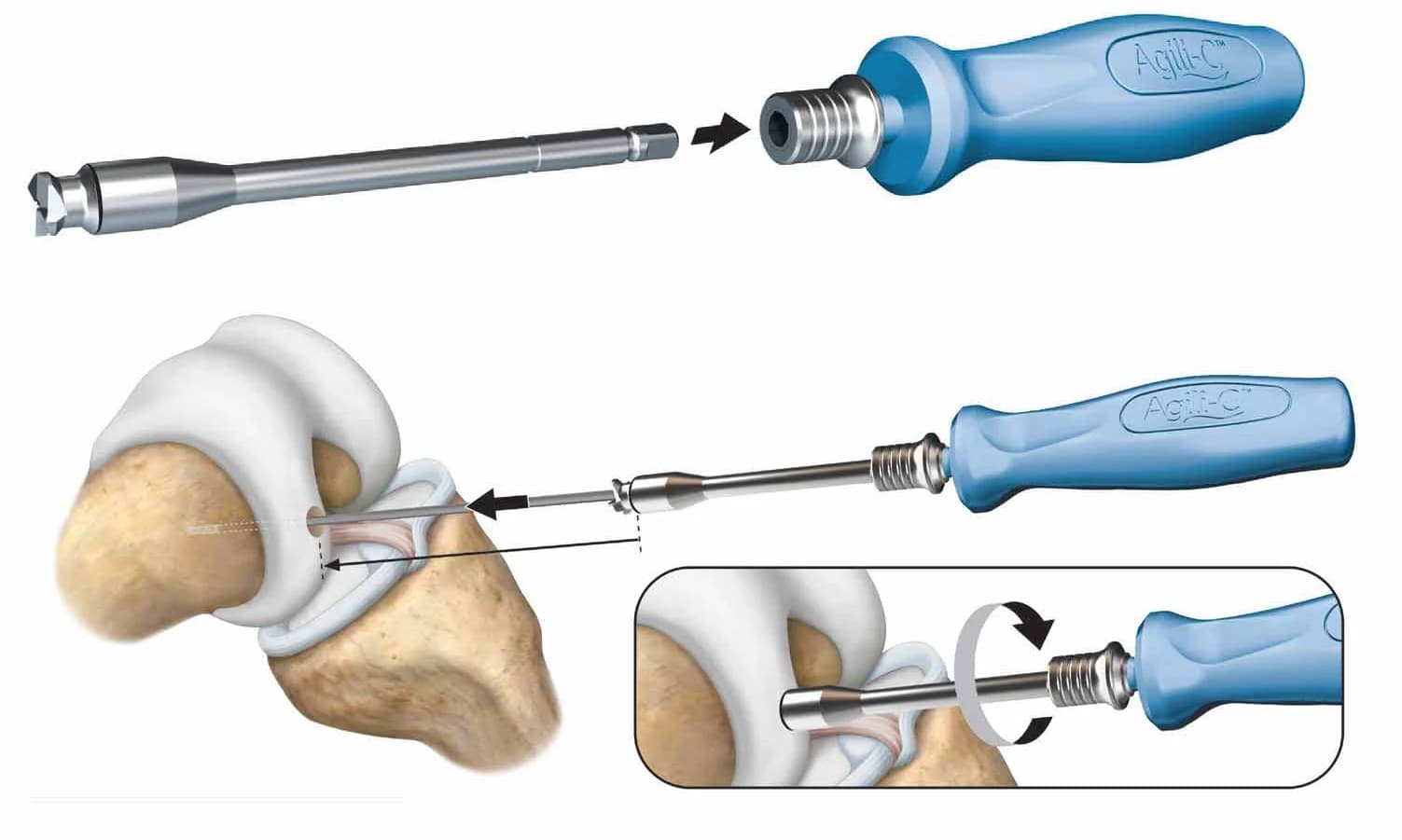
Drill, ream and shape the implant bed
The osteochondral site is prepared to the selected diameter and depth. This is not surface application: the bed extends into subchondral bone so the two implant zones sit in their intended tissue environments.
When multiple implants are required, the technique guide specifies maintaining an appropriate bone bridge between prepared sites.
Steps three and four
Place the implant and seat it below the joint surface
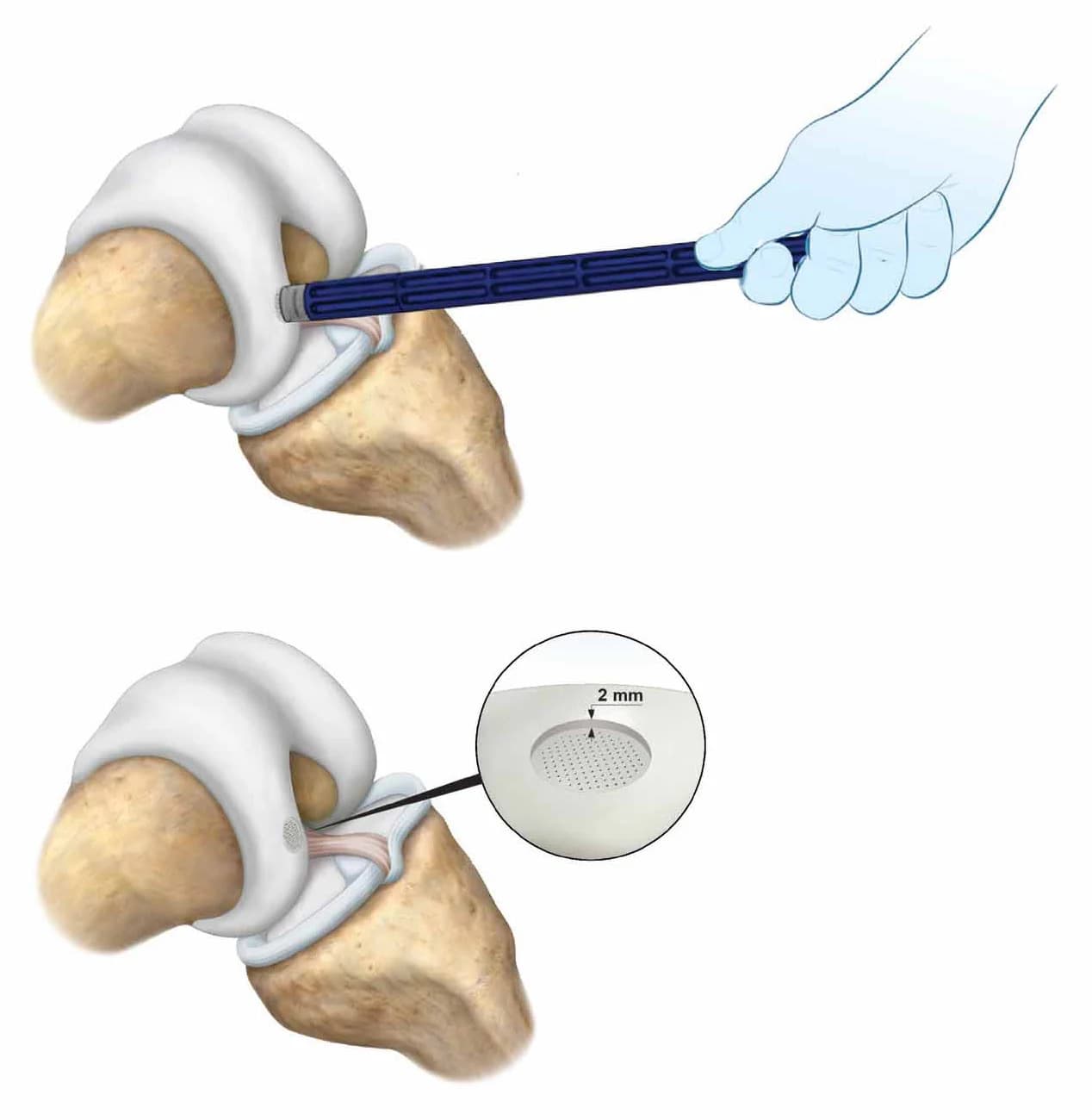
The off-the-shelf implant is introduced into the prepared site and seated according to the technique guide, approximately 2 mm below the articular surface. Final position is checked before the operation is completed.
The procedure is single-stage: there is no separate cell-harvesting operation or donor tissue wait. It remains a surgical osteochondral implantation with the risks and rehabilitation that entails.
CartiHeal procedure questions
Is CartiHeal an injection?
No. It is a surgical osteochondral implant. The cartilage-and-bone site is prepared before the implant is placed.
Is a separate cell harvest needed?
No. CartiHeal is an off-the-shelf implant used in a single operation rather than a two-stage cell-harvest pathway.
Can more than one implant be used?
The technique can use multiple plugs for selected lesions, with positioning and bone bridges planned according to current guidance.
Why is the implant seated below the surface?
The surgical technique guide specifies final seating approximately 2 mm below the articular surface. The surgeon follows current product guidance for final position.
Still have more specific concerns?
Free Discovery CallOptions that our doctors may discuss include NanoACi, ChondroFiller, Mytocel MSK, joint replacement, established conservative care or surgery, depending on examination and imaging.
Discuss current cartilage surgery options
CartiHeal is not yet bookable at LCC. Professor Lee can assess the lesion, explain established alternatives and record interest.