

NanoAMi · Rehabilitation
Recovery after NanoAMi
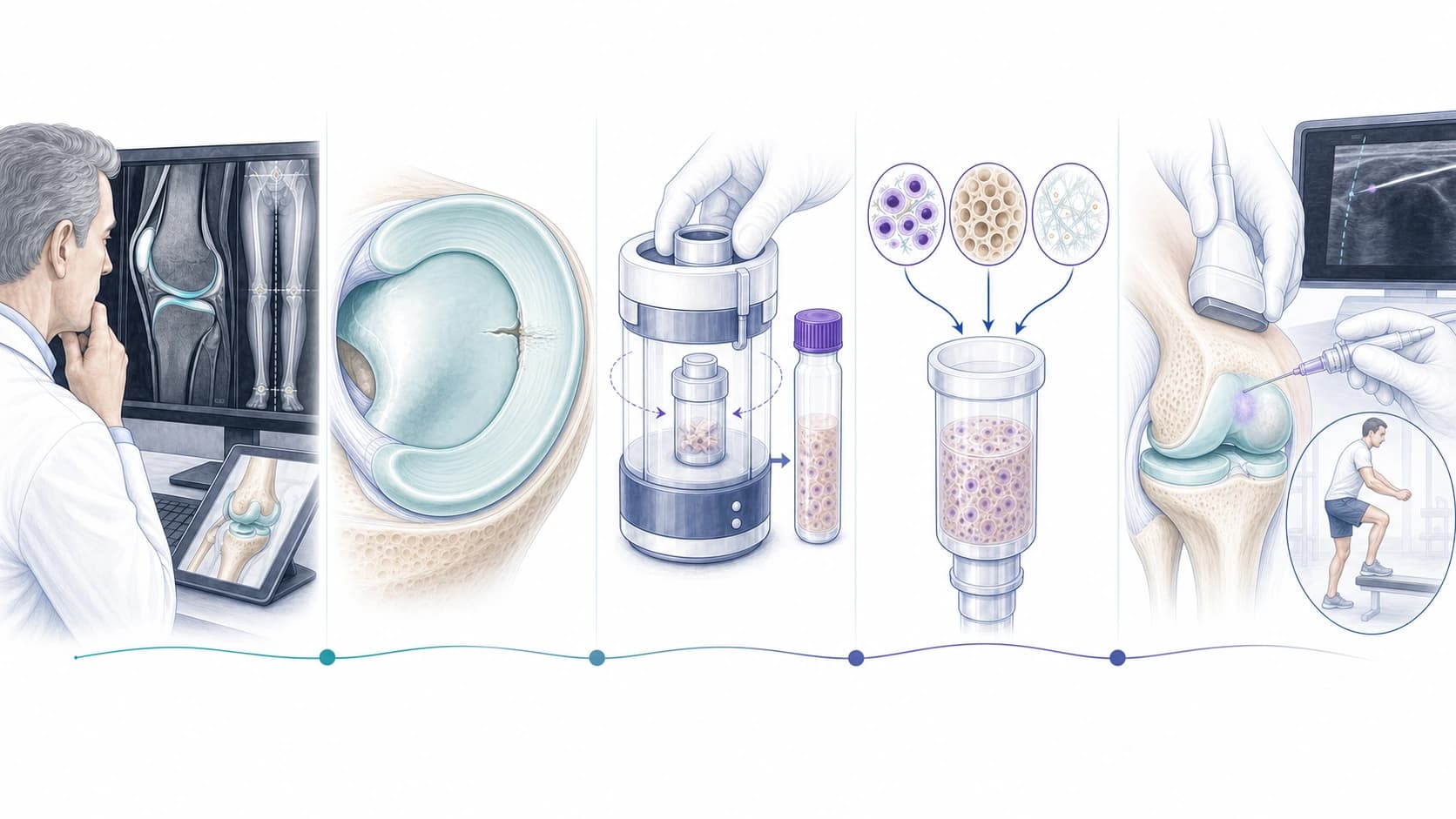
A non-surgical procedure still needs a structured recovery. Meniscus load is rebuilt from comfortable movement to strength, deeper flexion, rotation and meaningful activity.
 Reviewed byProfessor Paul Lee MBBch, FRCS (Tr & Orth), PhDCartilage and joint preservation expertise
Quick answer
Recovery is usually lighter than after stitched meniscus repair, but it is not “inject and ignore”. Early protection is followed by progressive strength and a controlled return to loaded flexion, rotation, running or sport.
Verified across three networks
Trusted by patients on Doctify, Google and Top Doctors
Early phase
Protect the treated meniscus without switching the knee off
The first phase aims to settle the knee and control load while maintaining useful movement. The exact advice depends on lesion position, symptoms, swelling and walking pattern rather than a universal timetable.
Deep loaded flexion and twisting usually create more meniscal demand than level walking. Those tasks are therefore reintroduced after basic range, control and strength are established.
- Monitor swelling, pain response and walking quality
- Maintain comfortable range of movement
- Use early strength work that does not provoke the joint
- Avoid guessing readiness from pain on one good day

Capacity phase
Strength comes before uncontrolled rotation
Progression normally builds quadriceps, hamstring, hip and calf capacity before demanding pivoting or rapid direction changes. The knee needs to tolerate force predictably, not only feel comfortable at rest.
Cycling, gym work, running and field sport place different demands on the meniscus. The return plan should match the activity the patient actually needs rather than treating “sport” as one category.
Decision points
Symptoms, swelling and function guide the next stage
Recovery is not judged by calendar alone. A stable knee that tolerates the current load without a delayed flare can progress. Recurrent swelling, catching, loss of extension or worsening mechanical symptoms should prompt reassessment.
NanoAMi does not remove the need for rehabilitation. The biological treatment and the loading plan are intended to work together.

NanoAMi recovery questions
Will I need crutches after NanoAMi?
The standard non-surgical pathway does not automatically require the same restrictions as a stitched repair, but temporary support may be advised if pain, swelling or walking quality warrants it.
When can I bend the knee deeply?
Deep loaded flexion is normally reintroduced progressively because it can increase meniscal demand. Timing depends on the damage pattern, symptoms and strength.
When can I run again?
Running follows adequate walking control, strength and tolerance of lower-impact loading. There is no single date that safely applies to every meniscus pattern.
What symptoms should be reassessed?
Persistent or increasing swelling, true locking, loss of extension, instability or worsening catching should be reviewed rather than pushed through.
Still have more specific concerns?
Free Discovery CallOptions that our doctors may discuss include NanoACi, ChondroFiller, Mytocel MSK, joint replacement, established conservative care or surgery, depending on examination and imaging.
Plan recovery around the actual meniscus
Professor Lee and the rehabilitation team can set expectations from the MRI pattern, symptoms, activity and response to progressive load.