

NanoAMi · Patient selection
Which meniscus problems may suit NanoAMi?
The useful distinction is not simply tear or no tear. It is whether viable meniscus remains stable—or whether the knee has a mechanical problem that needs repair.
 Reviewed byProfessor Paul Lee MBBch, FRCS (Tr & Orth), PhDCartilage and joint preservation expertise
Quick answer
NanoAMi may be considered for selected stable partial-thickness tears, intrasubstance degeneration and wear where useful meniscus remains. Displaced, root and mechanically unstable tears need a different assessment and may require surgery.
Verified across three networks
Trusted by patients on Doctify, Google and Top Doctors
The first dividing line
Stable tissue and mechanically unstable tissue are different problems
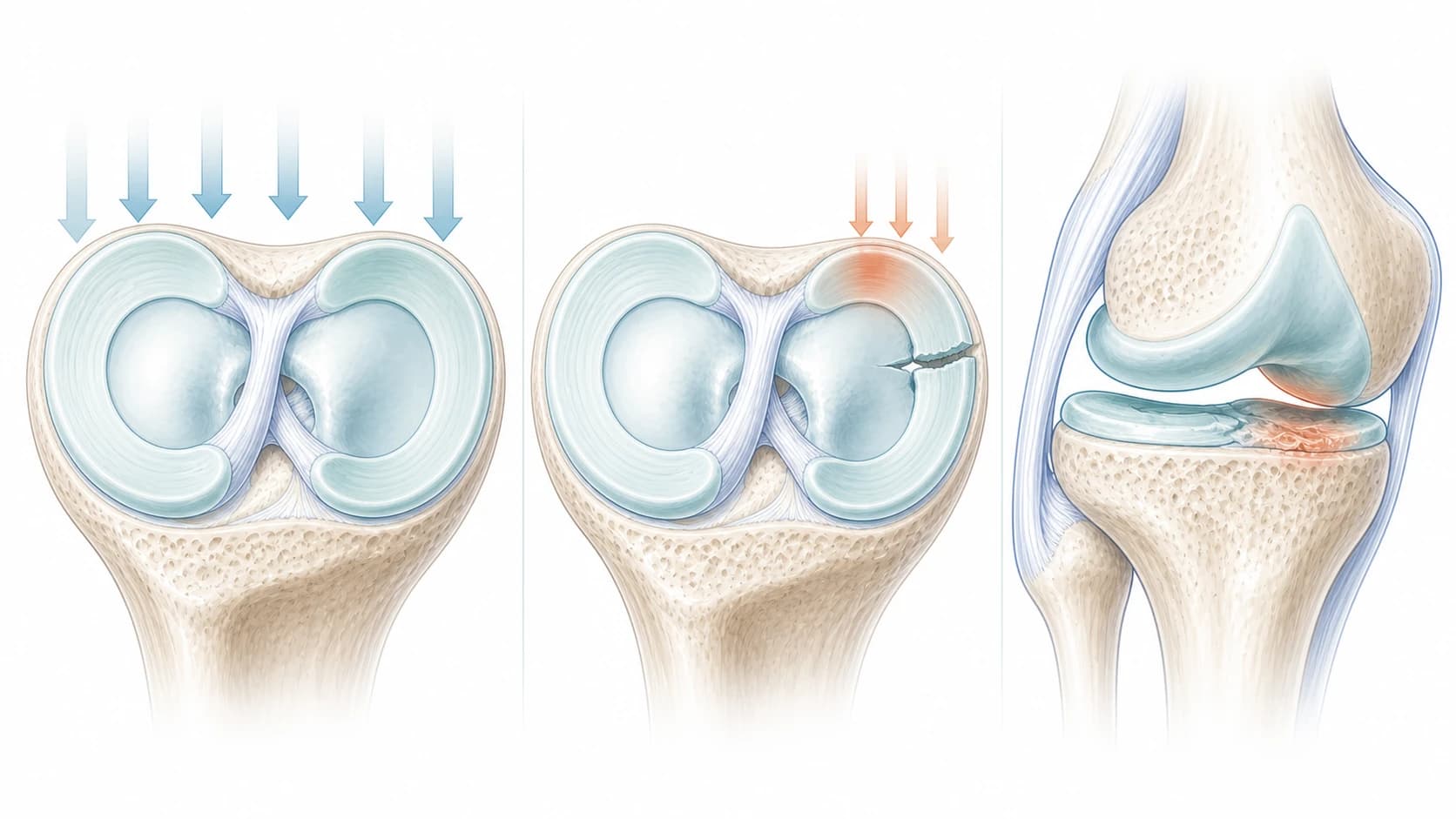
A meniscus can be painful because its tissue is worn or partly damaged while remaining in position. It can also fail mechanically, leaving a displaced fragment, an unstable flap or a root that no longer anchors the meniscus. Those patterns should not be placed on the same pathway.
NanoAMi is considered for selected non-surgical cases where viable meniscus remains and the damage does not need stitches or reattachment. It cannot restore a missing anchor or hold a displaced tear back in place.
- Stable partial-thickness tears
- Intrasubstance degeneration without displacement
- Meniscal wear with useful tissue still present
- Symptoms that fit the meniscus without true mechanical locking

Four assessment questions
Suitability is a knee decision, not a tear-label decision
Professor Lee considers whether the meniscus is mechanically stable, how much functional tissue remains, whether alignment and ligaments are loading it fairly, and what is happening in the surrounding cartilage. Pain can come from more than one structure.
Recent MRI is interpreted alongside examination and symptoms. A horizontal signal on a report may be incidental; a root tear with extrusion may be urgent even when pain is manageable.
- Is there locking, displacement, extrusion or loss of root function?
- Is enough viable meniscus present to preserve?
- Are alignment, ligament stability and load contributing to failure?
- Does the cartilage status change the realistic goal?
When the pathway changes
Some findings point away from a stand-alone injection
A displaced bucket-handle tear, an unstable fragment, a root tear, substantial extrusion or persistent true locking can require arthroscopic repair or another operation. Major ligament instability or malalignment may also need correction if it continues to overload the meniscus.
This does not mean all MRI tears need surgery. It means the structural question comes first. Rehabilitation, a non-surgical biological pathway and surgical repair each have a place when matched to the right pattern.

NanoAMi suitability questions
Does every meniscus tear need surgery?
No. Many stable or degenerative tears are managed without surgery. The need for repair depends on stability, displacement, root involvement, locking, tissue quality and the wider knee.
Can NanoAMi treat a root tear?
A root tear is a mechanical failure of the meniscus attachment and often needs a surgical opinion. A biological injection cannot reattach the root to bone.
Do I need an MRI before NanoAMi?
Recent MRI is usually important because symptoms alone cannot reliably distinguish stable intrasubstance damage from a displaced, root or unstable tear.
Can osteoarthritis affect suitability?
Yes. Cartilage wear, alignment and the overall joint environment affect both symptoms and the realistic goal. The meniscus cannot be assessed in isolation.
Still have more specific concerns?
Free Discovery CallOptions that our doctors may discuss include NanoACi, ChondroFiller, Mytocel MSK, joint replacement, established conservative care or surgery, depending on examination and imaging.
Find out whether the meniscus is stable
Professor Lee reviews the MRI, symptoms, examination and mechanics before recommending rehabilitation, NanoAMi or a surgical pathway.