

NanoAMi · Treatment comparison
NanoAMi vs meniscus repair
One supports selected stable tissue without surgery. The other mechanically fixes a repairable unstable tear. MRI pattern and knee mechanics decide which problem exists.
 Reviewed byProfessor Paul Lee MBBch, FRCS (Tr & Orth), PhDCartilage and joint preservation expertise
Quick answer
NanoAMi is a stand-alone non-surgical pathway for selected stable damage. Meniscus repair is surgery for tissue that needs fixation. An injection cannot substitute for stitches when the meniscus has mechanically failed.
Verified across three networks
Trusted by patients on Doctify, Google and Top Doctors
Different jobs
Biological support cannot replace mechanical fixation
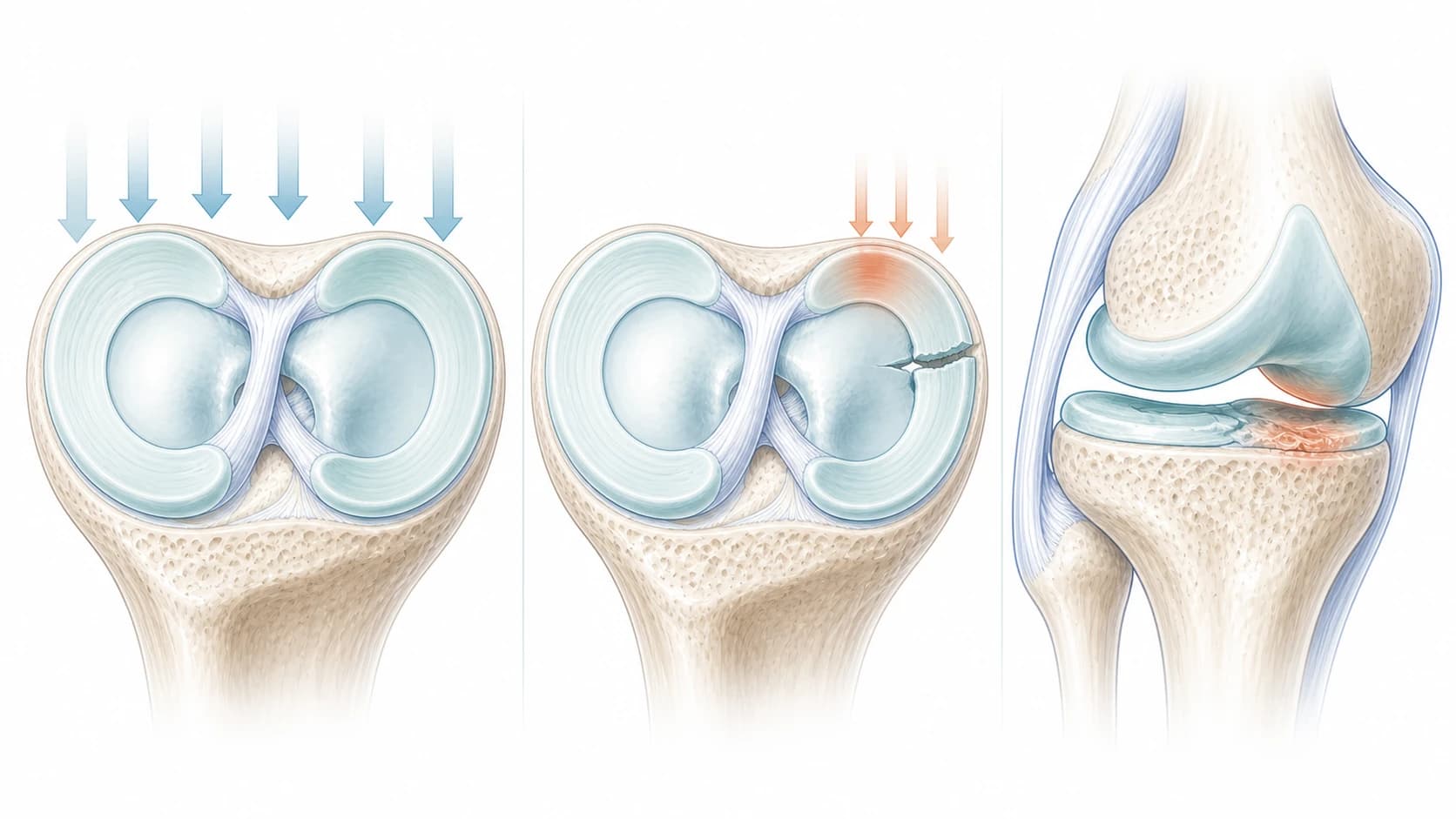
NanoAMi is designed for selected stable damage where viable meniscus remains in position. Arthroscopic repair is used when a repairable tear must be held together or reattached with sutures or anchors.
Choosing between them is not a contest between injection and surgery. The tear geometry, stability and tissue attachment decide which job needs doing.
Surgical repair
Repair preserves tissue by restoring structure
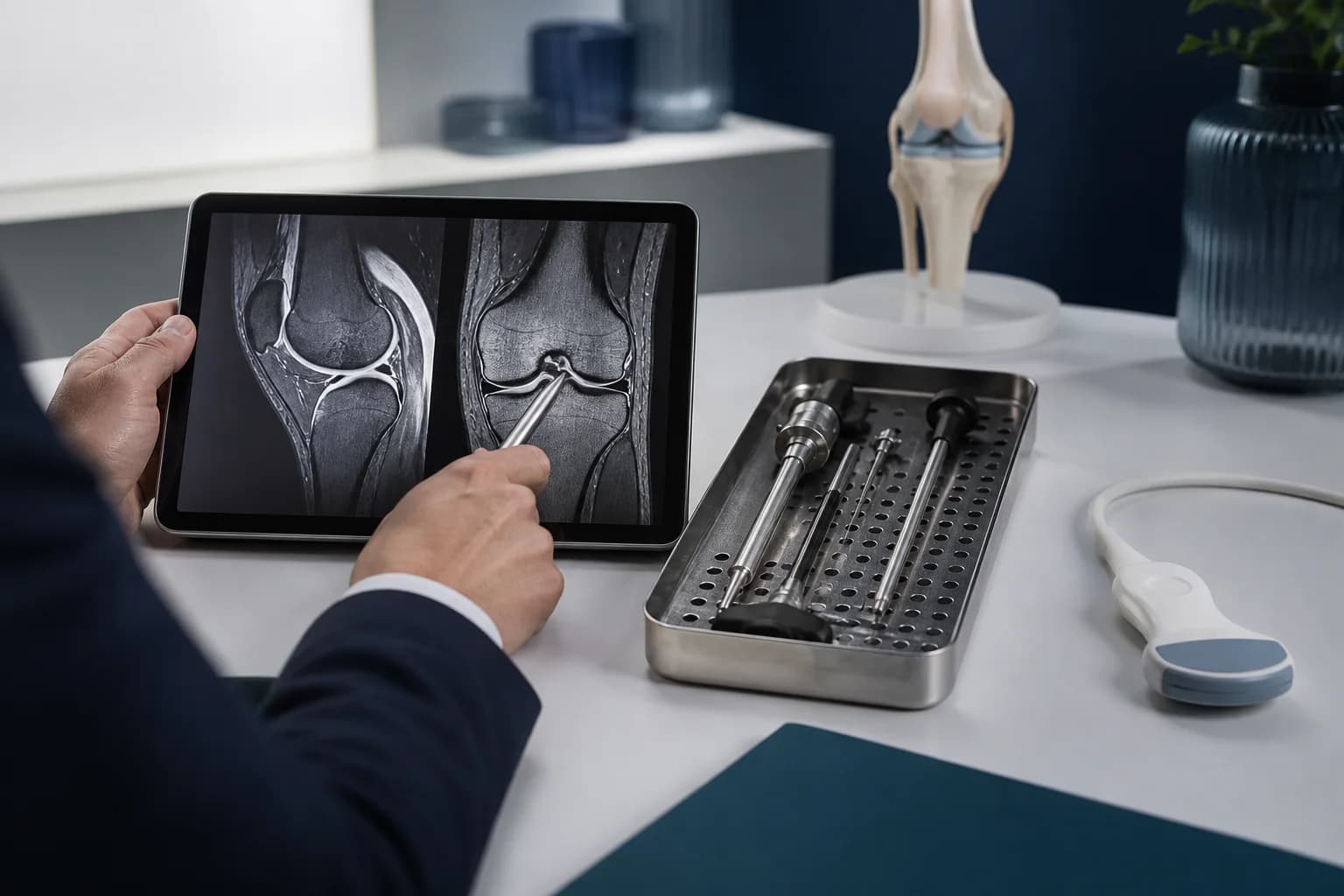
When a tear is repairable and unstable, surgery aims to restore continuity and preserve as much meniscus as possible. The trade-off is an operation, post-operative restrictions and a longer protected rehabilitation while the repair heals.
Root tears, displaced bucket-handle tears and unstable peripheral tears are examples where the mechanical question may dominate. Suitability for repair still depends on tissue quality, blood supply, chronicity and the wider knee.
Not mutually exclusive in every case
An adjunct after surgery is a separate clinical plan
Biological treatment may sometimes be discussed around a separately indicated repair. That does not turn the standard NanoAMi pathway into surgery, and it should not blur the message that its primary route is non-surgical.
The order of decisions remains the same: restore mechanics when necessary, preserve viable tissue and use rehabilitation to rebuild function.
Side-by-side
Non-surgical biology or surgical fixation?
The correct column is determined by the structure, not by preference alone.

NanoAMi and meniscus repair questions
Is NanoAMi a non-surgical alternative to every meniscus repair?
No. It cannot replace mechanical fixation when a tear is displaced, unstable or detached. The two pathways solve different structural problems.
Does every tear seen on MRI need repair?
No. Many stable or degenerative findings do not require arthroscopic repair. Symptoms, examination, tear stability and the wider knee determine relevance.
Can NanoAMi be used after meniscus repair?
Biological support may sometimes be considered as an adjunct to a separately indicated operation. That is not the standard stand-alone NanoAMi pathway.
Which recovery is longer?
A sutured repair normally requires more protection because the mechanically repaired tissue must heal. Exact restrictions vary by tear and repair technique.
Still have more specific concerns?
Free Discovery CallOptions that our doctors may discuss include NanoACi, ChondroFiller, Mytocel MSK, joint replacement, established conservative care or surgery, depending on examination and imaging.
Clarify whether your tear needs fixation
Professor Lee can review whether the meniscus is stable and viable, or whether a repairable mechanical lesion needs surgery.